China Top 10 Skincare Manufacturers How Are Products Made?

Time:2026-10-19 Author:Isabella
0%

China’s skincare industry combines advanced laboratories, large-scale production, and flexible private-label services. This guide examines ten leading manufacturers and asks, “how are skincare products made?” The answer begins with research, not attractive packaging.

Experienced formulators study skin concerns, ingredient compatibility, texture, stability, and consumer safety. They may test botanical extracts, peptides, ceramides, sunscreens, or gentle cleansing agents. Each formula requires controlled weighing and documented batch records. Small samples are mixed under monitored temperature and speed. The texture must feel smooth, consistent, and comfortable on skin.

It is not magic.

After formulation approval, manufacturers conduct stability, microbiological, compatibility, and safety assessments. Production teams sanitize vessels before blending purified water, oils, powders, and active ingredients. Operators inspect color, odor, viscosity, and filling accuracy. Products then move into tubes, jars, pumps, or bottles through calibrated equipment. Seals, labels, lot codes, and expiry information receive further checks.

This process can look impressive, yet no factory is flawless. Supplier changes, packaging defects, or unstable ingredients may create unexpected problems. Reliable manufacturers respond through traceability, corrective action, and documented quality systems. Buyers should verify certifications, testing records, factory audits, minimum order quantities, and regulatory support. A glossy showroom proves little by itself.

The companies discussed here are assessed through manufacturing capability, formulation expertise, quality controls, export experience, and transparency. Rankings can change as facilities, certifications, and product performance develop. That uncertainty matters. Readers should compare evidence rather than accept promotional claims. Understanding each production stage makes supplier selection more practical, careful, and informed.
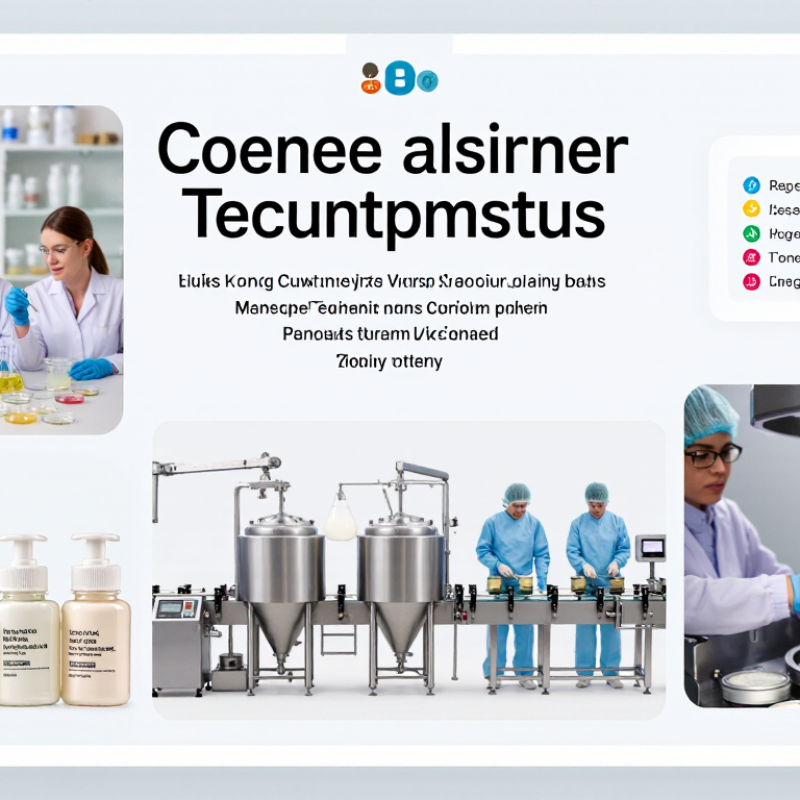
China Top 10 Skincare Manufacturers How Are Products Made?

China’s Skincare Manufacturing Industry and Its Main Product Categories

China’s skincare manufacturing industry serves both domestic and international markets. Its strength comes from flexible production, mature supply chains, and fast formulation development. Many factories operate as OEM or ODM partners, supporting product design, testing, filling, and packaging.

The main product categories include facial cleansers, toners, emulsions, creams, serums, facial masks, body care, and sun protection. Cleansers often use mild surfactants for daily use. Serums may contain humectants, botanical extracts, or skin-conditioning ingredients. Creams depend on stable oil-water emulsions. Sheet masks require controlled fabric cutting, essence filling, and sealed packaging. Sun protection needs especially careful testing and regulatory review.

Production begins with approved raw materials and documented formula records. Technicians check appearance, odor, viscosity, pH, and microbial quality. Stability testing examines how a formula reacts to heat, light, and time. Filling lines must control weight and prevent contamination. I have found that clean rooms alone do not guarantee consistent products. Operator training and accurate batch records matter just as much.

A polished sample can still hide weaknesses. Packaging compatibility is sometimes underestimated. Pumps may clog, labels may peel, or formulas may separate after transport. Reliable manufacturers investigate these failures instead of simply replacing the sample. They also maintain traceable inspection records and communicate limitations clearly. This practical honesty is valuable when selecting a capable skincare manufacturing partner in China.

How the Top 10 Chinese Skincare Manufacturers Are Selected

Selecting the top 10 Chinese skincare manufacturers requires more than checking production volume. The process begins with documented factory experience, product categories, and verified production capacity. We review facility licenses, quality systems, and manufacturing records where available. A clean laboratory matters. So does a consistent batch history.

Technical capability receives close attention. Evaluators examine formulation teams, stability testing, microbiological controls, packaging compatibility, and ingredient traceability. They may request sample batches and compare texture, scent, color, and labeling accuracy.

Reliable manufacturers explain their testing methods clearly. They also provide certificates from recognized testing or auditing organizations. Claims must match evidence, not attractive sales language.

Real communication reveals practical strengths. We assess response time, sample revisions, minimum order requirements, lead times, and support for regulatory documentation. Factory visits can reveal details that brochures hide, such as storage temperature records or clearly marked quarantine areas. Still, no selection method is perfect. Public information may be incomplete, and one successful sample cannot prove long-term consistency. For that reason, the list combines documents, technical discussions, sample evaluation, and independent verification. We also consider whether a manufacturer admits limitations. Honest answers often deserve more trust than polished promises.

How Skincare Formulas Are Developed and Ingredients Are Evaluated

In China’s leading skincare manufacturing facilities, formula development begins with a clear consumer need. A chemist may target hydration, oil control, or a gentle skin feel. The team then selects ingredients based on function, quality, compatibility, and safety data. Each raw material is checked through supplier documents, identity testing, and contamination controls.

A working sample is mixed in a small laboratory vessel before larger production. The team records its color, scent, texture, pH, and viscosity. Stability testing follows. Samples may remain in warm cabinets, under light, or through temperature changes for several weeks. Researchers watch for separation, odor changes, or microbial growth. Small details matter. A formula can look perfect on day one and fail later.

Ingredient evaluation also considers concentration, skin tolerance, and interaction with packaging. Preservative performance requires careful testing, not assumptions. Packaging compatibility can reveal leaks, discoloration, or changes in texture. Manufacturing specialists review test results against applicable market requirements and documented quality procedures. Experience helps, but it does not replace evidence. Some early formulas need repeated adjustment because a pleasant texture may reduce stability. That step is humbling. Reliable development depends on traceable records, qualified testing, and honest review of weaknesses before production begins.

How Skincare Products Are Manufactured, Filled, and Packaged

Skincare manufacturing begins with controlled formulation, not attractive packaging. In a typical Chinese factory, purified water passes through filtration and microbial monitoring before entering stainless-steel mixing tanks. Technicians weigh oils, humectants, emulsifiers, and active ingredients against approved batch records. The mixer then controls temperature, speed, and vacuum pressure. Small details matter.

The filling line follows validated cleaning and line-clearance procedures. Operators inspect bottles, pumps, and tubes before dosing each unit by weight or volume. Samples are checked for appearance, pH, viscosity, microbial quality, and stability.

ISO 22716:2007 provides the main good manufacturing practice framework for cosmetic production. However, compliance is not merely paperwork.

A single poorly cleaned transfer hose can affect an entire batch. That risk deserves more attention than it often receives.

Packaging involves coding, sealing, label verification, and carton inspection. The packaging must protect formulas from light, oxygen, and contamination during transport. Grand View Research estimated the global skincare market at about USD 142.1 billion in 2022, showing the scale behind these operations.

Yet larger production does not automatically mean better quality. Research and Markets has also identified sustainability and packaging efficiency as continuing industry priorities. Recyclable materials can help, but they may reduce barrier performance if selected without testing.

Manufacturing remains a balance between laboratory evidence, factory experience, and honest quality review. Not every process is perfect. Continuous improvement is essential.

How Quality Control and Regulatory Compliance Are Managed

China’s leading skincare manufacturers manage quality through documented, repeatable controls rather than attractive packaging alone. Production usually begins with approved suppliers, ingredient specifications, and identity testing. Each raw material receives a batch number before entering storage. Temperature and humidity are recorded, often several times each day.

During manufacturing, trained technicians check water quality, viscosity, color, odor, and microbial limits. Samples are collected from mixing tanks and filling lines. Quality teams compare results with approved specifications. They also review equipment cleaning records and employee training logs. A batch cannot be released until laboratory results and production records agree. This discipline supports GMP-based systems, including ISO 22716 practices, while destination-market rules may require additional testing or registration.

Regulatory compliance extends beyond the factory floor. Manufacturers verify ingredient restrictions, claims, warnings, language, packaging materials, and traceability requirements for each market. Stability testing may place finished products in controlled heat and humidity chambers. Packaging compatibility testing can reveal leakage, discoloration, or pump failure after months of storage. Small details matter.

No control system is flawless. A label can shift slightly, or a supplier can change an ingredient’s processing method without obvious visual differences. Strong manufacturers investigate deviations, quarantine affected batches, and document corrective action. They should also welcome external audits, because internal confidence can hide practical weaknesses. Good records are useful. Honest records are better.

China Top 10 Skincare Manufacturers How Are Products Made? - How Quality Control and Regulatory Compliance Are Managed

No. Manufacturing and Compliance Dimension How the Product Is Made or Controlled Typical Quality Evidence Applicable Regulatory or Standard Reference Key Acceptance Criteria
1 Supplier and Raw Material Qualification Ingredients and packaging components are sourced from approved suppliers and checked against defined specifications before use. Approved supplier list, certificates of analysis, incoming inspection records, allergen and origin declarations. ISO 22716:2007 cosmetic GMP; China Cosmetic Supervision and Administration Regulation; EU Regulation (EC) No. 1223/2009. Material identity, appearance, documentation, and test results conform to the approved specification.
2 Formula and Safety Assessment The formula is reviewed for ingredient restrictions, intended use, exposure, compatibility, and foreseeable consumer risks before production. Master formula, toxicological review, safety assessment, stability plan, and restricted-substance screening. China CSAR safety assessment requirements; EU Regulation (EC) No. 1223/2009 safety report requirements; U.S. MoCRA safety substantiation requirement. All ingredients are legally permitted for the target market and supported by documented safety substantiation.
3 Water Treatment and Monitoring Purified water is produced, stored, circulated, and monitored under a documented sanitation and maintenance program. Water-system qualification, sanitization records, microbial test results, conductivity or other defined chemical monitoring. ISO 22716:2007; site-specific validated water-quality specifications; applicable local cosmetic GMP requirements. Results remain within approved microbiological and chemical limits before water is released for manufacturing.
4 Weighing and Dispensing Materials are weighed by trained personnel using calibrated equipment and are independently checked before entering the batch process. Batch weighing sheet, equipment calibration status, barcode or label verification, and second-person check. ISO 22716:2007; documented GMP procedures for identification, weighing, and traceability. Correct material, lot number, quantity, unit of measure, and status label are verified before use.
5 Mixing, Heating, and Homogenization The batch is processed according to the approved order of addition, temperature, mixing speed, time, and homogenization parameters. Electronic or paper batch record, temperature chart, mixing-time record, line-clearance checklist, and in-process samples. ISO 22716:2007; validated or justified process parameters under the site quality system. Process parameters meet the approved batch record and the bulk passes defined appearance, pH, viscosity, and homogeneity checks.
6 Microbiological and Preservative Control Finished products and selected in-process materials are tested for microbial quality; preservative performance is assessed when relevant to the formula. Microbial test reports, preservative efficacy or challenge-test data, environmental monitoring, and laboratory worksheets. ISO 17516:2014 for cosmetic microbiological limits; ISO 11930:2019 for preservation efficacy evaluation. Microbial results meet the product specification and the formula demonstrates suitable preservation for its intended use.
7 Filling, Packaging, and Label Control Approved bulk is filled into verified containers, coded for traceability, and packed using line-clearance and reconciliation procedures. Packaging inspection record, fill-weight checks, coding verification, label approval, and component reconciliation. ISO 22716:2007; China cosmetic labeling rules; EU Regulation (EC) No. 1223/2009 labeling provisions; applicable destination-market rules. Correct container, closure, artwork, batch code, net contents, and required warnings are confirmed.
8 Stability and Compatibility Testing Samples are stored under defined conditions to evaluate physical, chemical, microbiological, and packaging compatibility changes over time. Stability protocol, accelerated and real-time observations, packaging compatibility results, and shelf-life justification. ISO/TR 18811:2018 guidance; market-specific cosmetic safety and shelf-life documentation requirements. No unacceptable change in appearance, odor, pH, viscosity, microbial quality, container integrity, or product performance.
9 Batch Release and Traceability Quality personnel review the complete batch record and test results before authorizing distribution. Certificate of analysis, deviation and corrective-action review, release checklist, retain samples, and distribution records. ISO 22716:2007; ISO 9001:2015 quality-management principles; destination-market recordkeeping rules. All required tests pass, deviations are assessed, documentation is complete, and the batch can be traced by lot number.
10 Post-Market Surveillance and Corrective Action Consumer complaints, adverse events, returns, and quality signals are assessed to identify trends and determine corrective or recall actions. Complaint log, adverse-event assessment, trend reports, investigation records, CAPA documentation, and recall traceability test. U.S. MoCRA adverse-event and recordkeeping provisions; EU Regulation (EC) No. 1223/2009 serious undesirable effects; applicable Chinese adverse-reaction monitoring rules. Reports are investigated within documented procedures, serious issues are escalated as required, and corrective actions are verified for effectiveness.

Reference note: Acceptance limits and testing frequency are product- and market-specific. Manufacturers should confirm the current legal requirements of each destination market before commercialization.

FAQS

How are the top skincare manufacturers selected?

Selection considers factory experience, production records, facility licenses, quality systems, and documented capacity.

Why is production volume not enough?

High output does not prove stable quality. Batch history and testing records reveal more.

What technical abilities are reviewed?

Evaluators examine formulation skills, stability testing, microbiological controls, packaging compatibility, and ingredient traceability.

How are skincare formulas developed?

Chemists begin with a consumer need, such as hydration, oil control, or gentle skin feel.

How are raw ingredients evaluated?

Teams review supplier documents, identity tests, contamination controls, function, compatibility, and safety information.

What happens during stability testing?

Samples may sit in warm cabinets, under light, or through temperature changes for several weeks.

What problems can stability testing reveal?

Testing may expose separation, odor changes, microbial growth, leaks, discoloration, or texture changes.

How are manufacturers evaluated through communication?

Reviewers assess response time, sample revisions, minimum orders, lead times, and regulatory document support.

Can one successful sample prove long-term quality?

No. One sample offers limited evidence. Consistent batches need repeated testing and traceable records.

Is the selection process perfect?

Not always. Public information may be incomplete, and reviewers may miss important weaknesses.

Conclusion

China’s skincare manufacturing industry covers a wide range of products, including facial cleansers, toners, serums, creams, masks, sunscreens, and body care items. This article explains how the top 10 Chinese skincare manufacturers are selected by examining their production capacity, research and development expertise, quality systems, product range, customization services, and compliance performance. It also introduces how formulas are developed, from identifying consumer needs and selecting suitable ingredients to conducting stability, safety, and compatibility evaluations.

Readers will learn how are skincare products made, from batching and mixing raw materials to homogenization, filling, sealing, labeling, and final packaging. The article also highlights the importance of quality control at every stage, including inspection of ingredients, monitoring of production conditions, testing of finished products, traceability, and documentation. Regulatory compliance is presented as an essential part of responsible manufacturing, helping ensure that skincare products meet applicable safety, labeling, and market requirements before reaching consumers.

Isabella

Isabella

Isabella is a dedicated marketing professional with a sharp focus on driving brand growth and engagement through strategic content creation. With an extensive background in digital marketing, she combines her passion for storytelling with her keen understanding of industry trends to deliver......